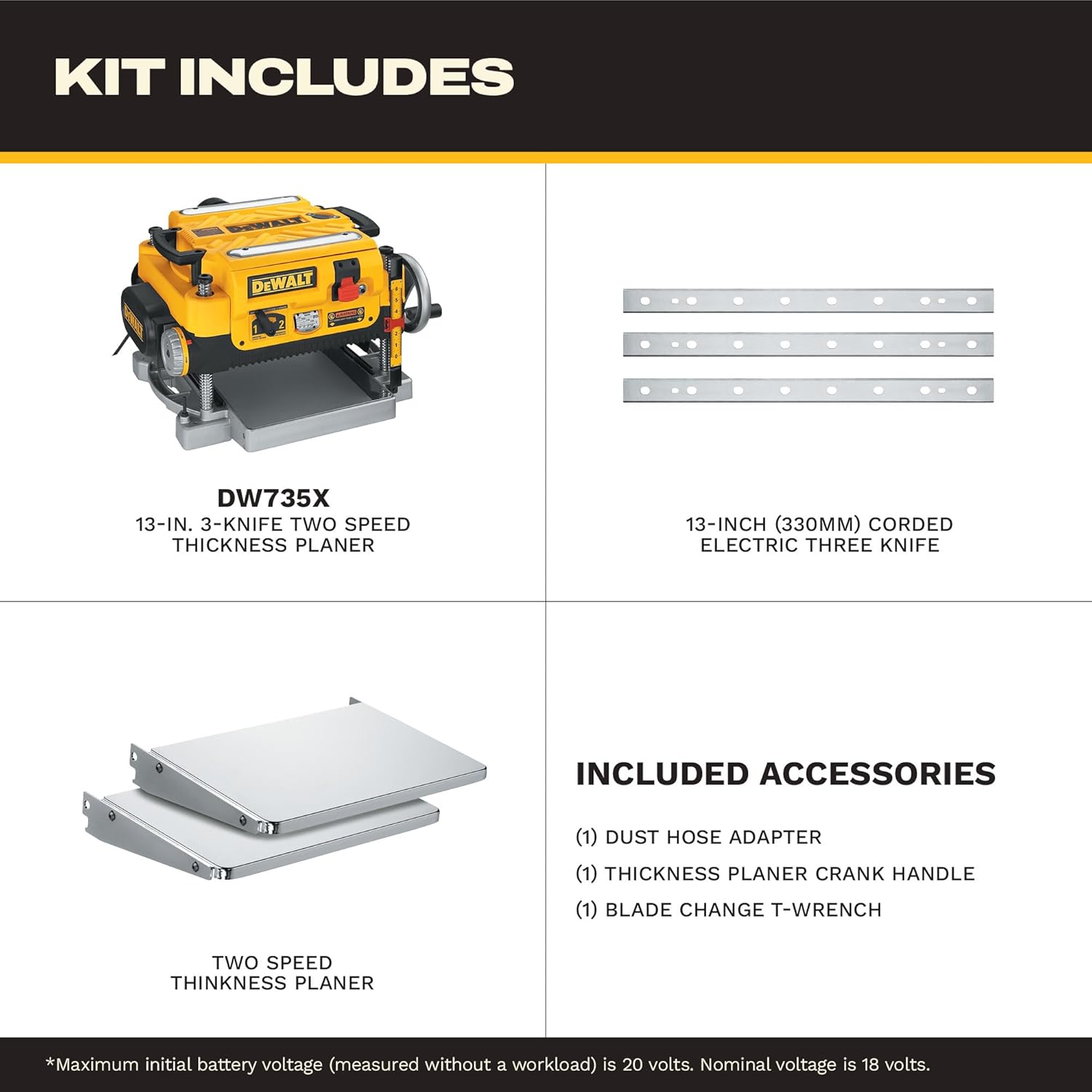
A thickness planer is a woodworking machine that shaves a board down to a precise, uniform thickness — think of it as a power tool that turns rough, uneven lumber into flat, smooth stock you can actually build with. If you’ve ever bought rough-sawn hardwood from a sawmill and wondered how to flatten it, or noticed that dimensional lumber from a home center is never quite as thick as advertised, a planer is the answer. The benchtop versions — machines light enough (barely) to move around a one- or two-car garage shop — sit in a sweet spot between $300 and $800 for most buyers. This article is for the woodworker who’s past “should I buy a planer?” and deep into “which one, and is the spiral cutterhead premium worth it?” We’ll compare DeWalt’s long-dominant DW735 against the growing field of spiral cutterhead machines, show you the real cost math, and end with a clear decision rule.
What “Spiral Cutterhead” Actually Means — and Why It Matters
A standard planer uses two or three long straight knives that span the full width of the machine. They’re cheap to replace, easy to find, and they work well — until they don’t. A nick from a hidden staple or a piece of silica in the wood creates a ridge that runs the full length of every board you plane until you flip or replace the knife.
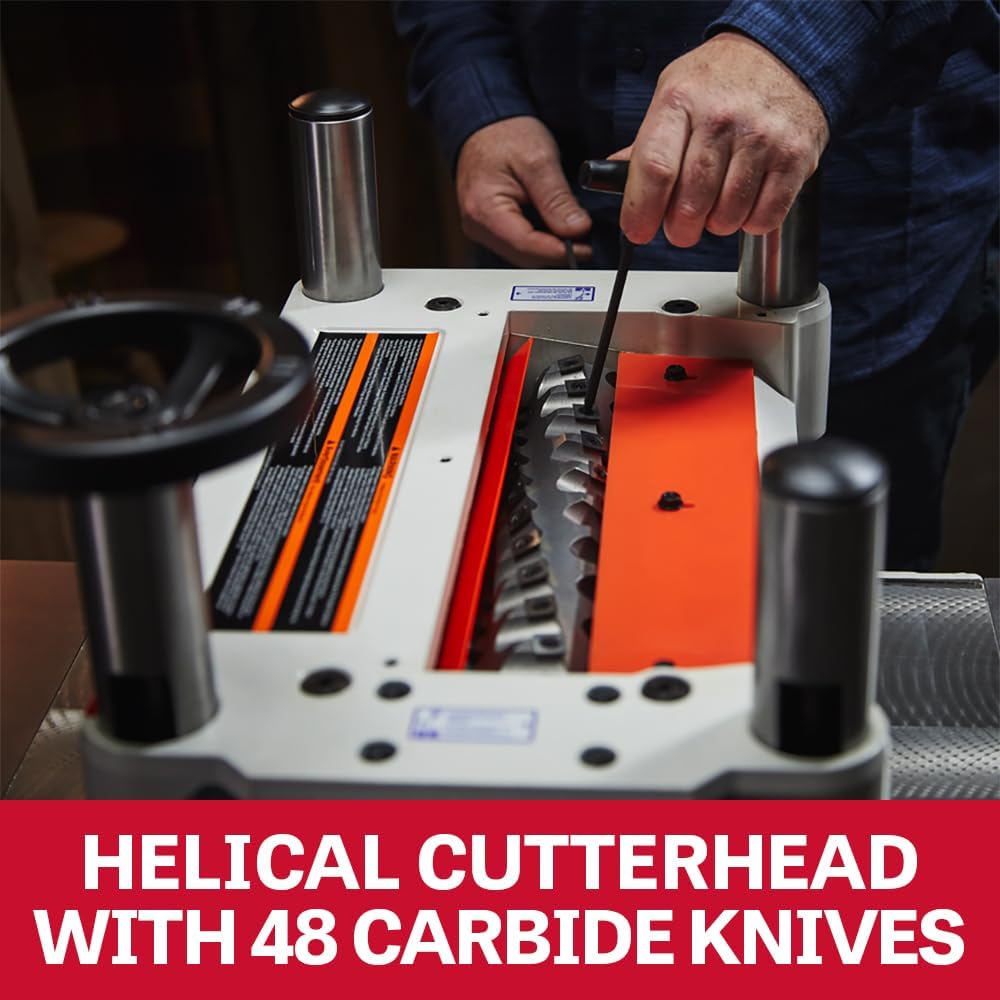
A spiral (or helical) cutterhead replaces those long blades with dozens of small, square carbide inserts arranged in a helix pattern around the cutterhead drum. Each insert cuts a small, overlapping scallop. The practical results are meaningful:
- Quieter operation — owners consistently report 8–10 dB reductions compared to straight-knife machines running identical stock, a significant difference in a closed garage shop.
- Better finish on figured wood — the shearing cut angle handles reversing grain in maple, cherry, and walnut dramatically better than a straight knife traveling perpendicular to the fiber.
- Longer effective cutting life — carbide inserts outlast HSS straight knives by a wide margin; when an insert dulls, you rotate it 90° to expose a fresh edge, and four edges per insert means you’re replacing inserts far less frequently than knives.
- Snipe reduction — spiral heads don’t eliminate snipe (the slight gouge at a board’s ends caused by rollers releasing pressure), but the geometry reduces its severity on many machines.
The tradeoff is upfront cost. A spiral cutterhead upgrade or a machine spec’d with one from the factory costs $150–$600 more than the equivalent straight-knife model. Whether that premium is worth it depends almost entirely on what species and grain patterns you run most.
The Three Practical Paths: A Side-by-Side Comparison
The spiral-versus-straight decision in the benchtop segment now has three real purchase options. Each is addressed below with a tier marker so you can quickly locate the recommendation that fits your situation.
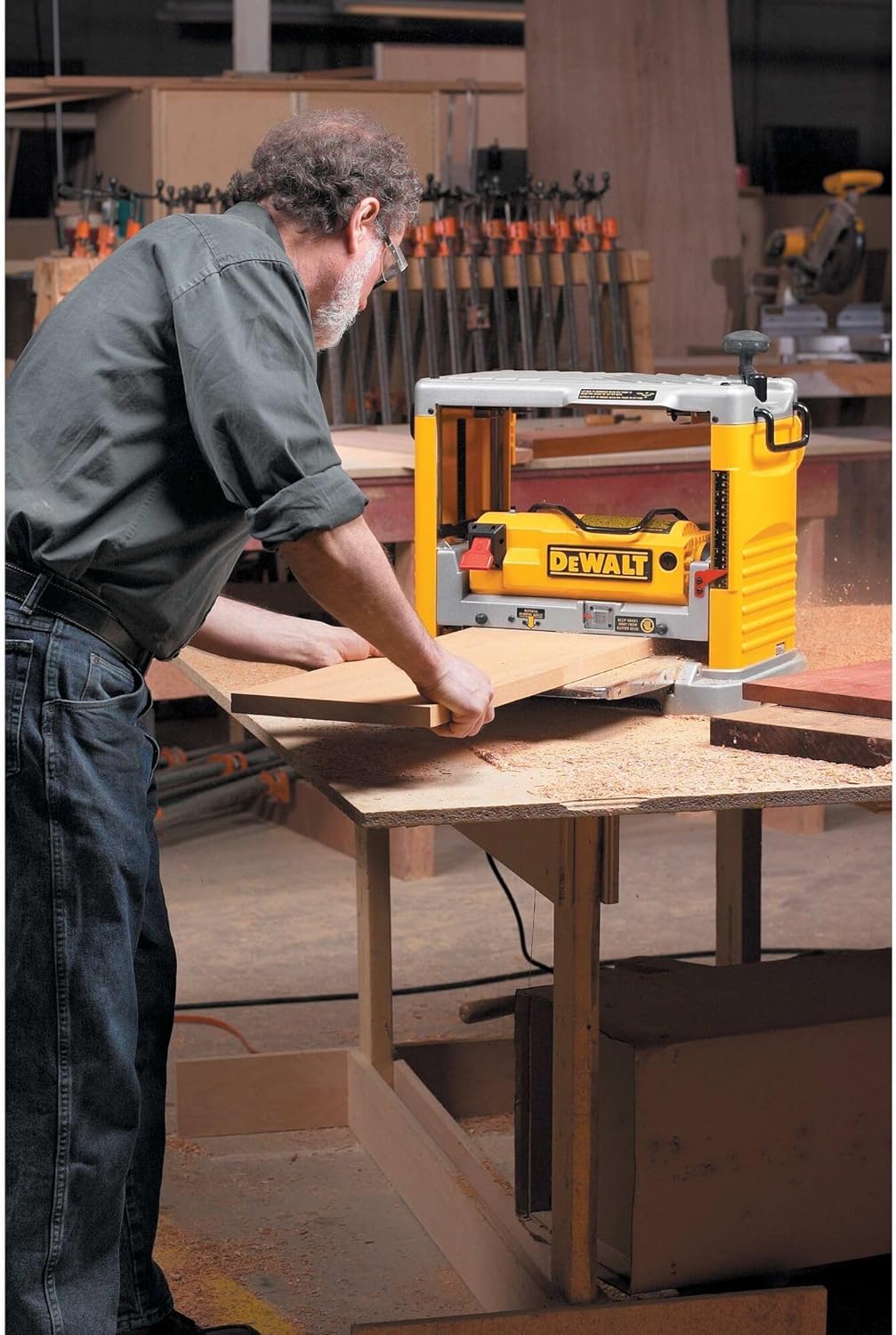
DeWalt DW735: The Battle-Tested Straight-Knife Standard
The DW735 has been the most-recommended benchtop planer in the $500–$600 range for over a decade, and the reasons are structural, not sentimental.
Published specs:
- 15-amp motor, 10,000 RPM no-load
- 13-inch width capacity, 6-inch thickness capacity
- Three-knife cutterhead with fan-assisted chip ejection
- Two-speed feed system: 96 cuts per inch (finish pass) or 179 cuts per inch (material removal)
- Weight: approximately 92 lbs
- Street price (mid-2026): $529–$569
Wood Magazine’s long-term planer evaluations consistently place the DW735 at the top of straight-knife benchtop machines for surface quality at moderate feed rates. Fine Woodworking’s buyer’s guidance highlights the two-speed feed system as a genuine differentiator — run it slow for glue-ready surfaces; run it fast to knock down rough stock quickly. That flexibility is rare in this price bracket.
The knife-change system is well-designed: indexable knives with a disposable-insert option mean you can swap blades in under 15 minutes without a jig. Replacement knife sets run $15–$25 from multiple suppliers, and DeWalt’s parts network means you’re rarely waiting more than a day or two for consumables. Dust collection is genuinely good for a benchtop machine — the fan-assisted chip ejection handles a standard shop vac adequately without requiring a high-CFM dedicated dust collector.
Where the DW735 loses ground: Figured wood is where straight knives show their limits. Pro Tool Reviews and Toolbox Buzz both document the tear-out penalty on reversing grain — maple with curl, quartersawn oak, and crotch figures will require hand-tool cleanup after a DW735 pass in a way that a spiral head largely eliminates. That’s not a design flaw; it’s the physics of straight-knife geometry against reversing fiber. For shops that primarily process flat-grained softwood or straight-grained hardwood, it’s not a meaningful limitation.
Cutech
$424.99
In stock on Amazon
Check price on AmazonGrizzly G0682: Factory Spiral at an Aggressive Price
Grizzly’s helical-head benchtop planers sit in the $650–$800 range and represent the most direct value argument against the DW735. The G0682 ships with a Byrd-style shelix head, a 15-amp motor, and 13-inch width capacity — comparable core specs to the DW735 at a roughly $150–$250 premium over the DeWalt’s street price.
This Old House’s planer roundup identifies the Grizzly spiral models as the strongest per-dollar case for a first spiral-head machine. The surface quality on figured stock is substantially better than the DW735 out of the box, and the insert rotation system means light users may go years before spending a dollar on consumables.
The known tradeoff: Grizzly’s support infrastructure isn’t DeWalt’s. Parts availability is fine for common items, but lead times on cutterhead components can stretch two to three weeks when ordering from their warehouse. For a weekend hobbyist, that’s tolerable. For a small-shop professional running production work, it’s a risk worth pricing into the decision. Popular Mechanics’ coverage of benchtop planers has flagged parts availability as the consistent differentiator between Grizzly’s value proposition and the major power tool brands — the machine is excellent; the support chain requires more planning.
DEWALT DW734
$549.00
In stock on Amazon
Check price on AmazonPowermatic 15HH: Premium Factory Spiral for Serious Production
The Powermatic 15HH is a different conversation entirely. At $1,700–$1,900 street price, it’s a 15-inch capacity machine with a factory helical cutterhead, a cast-iron table, and build quality that reviewers across Fine Woodworking and Toolbox Buzz describe as approaching stationary-machine standards in a technically portable format. At 285 lbs, “portable” is generous, but the point stands: this is the machine for a serious craftsperson who wants benchtop footprint without benchtop compromises.
The 15-inch capacity is a genuine workflow upgrade over 13-inch machines — wide panels, glued-up tabletops, and slab work that would require ripping and re-gluing on a 13-inch machine can run straight through the 15HH. The helical head handles the full range of figured domestic hardwoods with the finish quality that Fine Woodworking’s editors associate with hand-plane work: smooth, tearout-free surfaces that often go directly to finishing without intermediate sanding.
If you’re building furniture from figured hardwoods regularly and treating this as a capital investment rather than a consumable purchase, the 15HH is cost-defensible over a five- to ten-year horizon. The used-tool market for Powermatic stationary equipment holds value well, and the 15HH benefits from that brand reputation.
JET JPW-15BHH
$3,739.00
In stock on Amazon
Check price on AmazonThe Aftermarket Spiral Head: A Fourth Path Worth Knowing
This option doesn’t fit neatly into the three-machine comparison above, but it deserves its own section because it’s the most financially interesting path for existing DW735 owners or buyers who want to phase costs.
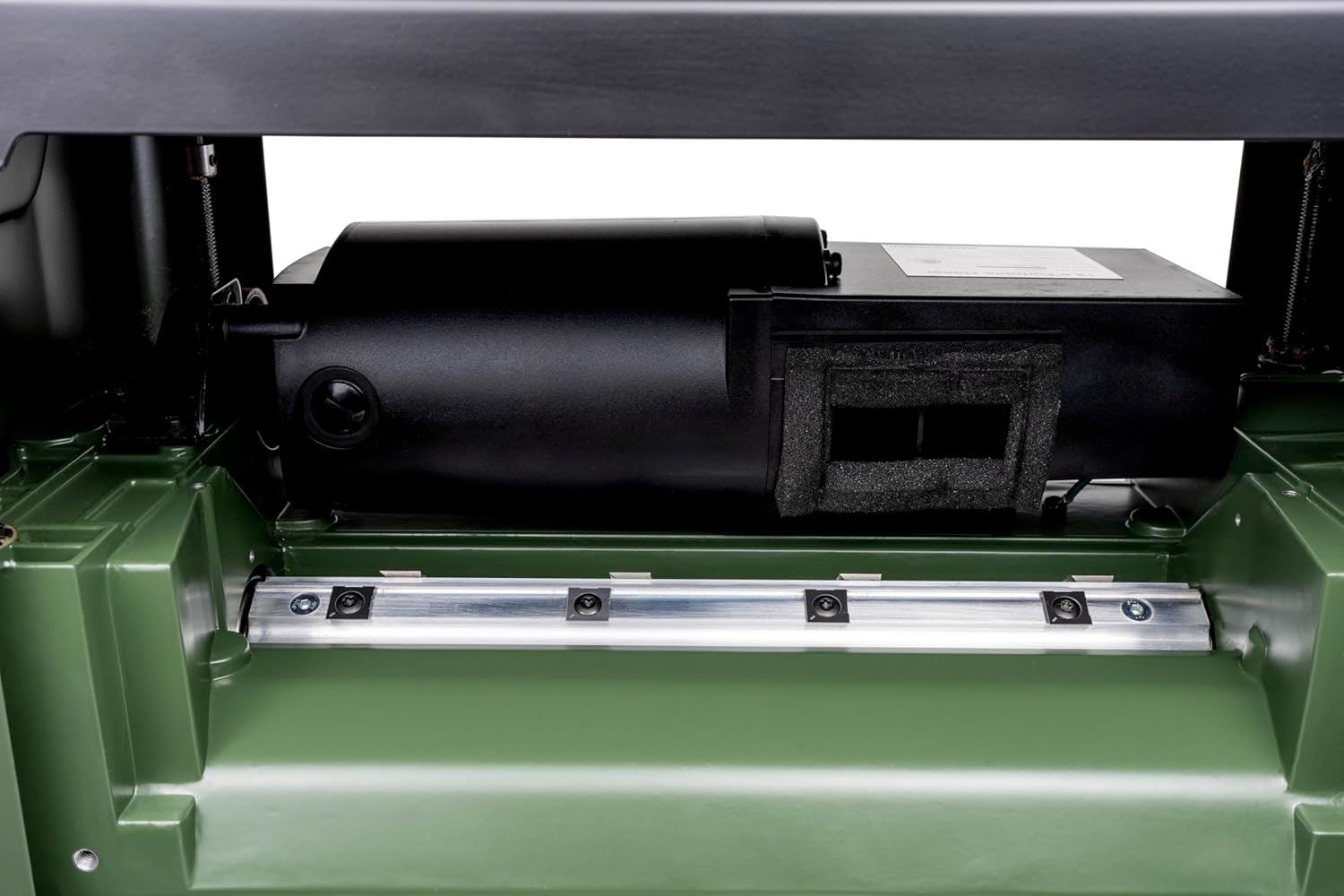
Companies including Byrd Tool and CUTECH manufacture drop-in spiral cutterhead replacements designed specifically for the DW735 platform. Prices range from $280–$420 depending on the manufacturer and insert count.
Toolbox Buzz has documented this upgrade path in detail: the swap is within reach for a mechanically confident woodworker — roughly two to three hours, basic hand tools, and careful calibration afterward — and the finish-quality improvement on figured stock is consistently described as dramatic. Owners report that tearout on reversing maple grain essentially disappears after the upgrade. The machine becomes meaningfully quieter as well, which matters in attached-garage shops where noise bleeds into living spaces.
The five-year cost math for a hobbyist running 2–4 hours per week:
| DW735 straight knife | DW735 + aftermarket spiral head | Grizzly G0682 factory spiral | |
|---|---|---|---|
| Initial cost | $549 | $899 | $725 (est. mid) |
| Consumables, Year 5 | ~$100 cumulative | ~$60 cumulative | ~$60 cumulative |
| Estimated resale, Year 5 | $200–$250 | $300–$375 | $175–$225 |
| Net 5-year cost (est.) | ~$399–$449 | ~$584–$659 | ~$560–$610 |
The DW735-plus-aftermarket-head path at roughly $899 all-in lands within $100–$200 of the Grizzly G0682’s factory spiral equivalent, while keeping DeWalt’s parts availability and platform track record intact. For a buyer who wants to start with a straight-knife machine and upgrade when budget allows, this phased approach is specifically validated by Toolbox Buzz’s long-term coverage of the platform.
Fine Woodworking’s editors have made the broader point consistently in their buyer’s guidance: the right cutterhead is a function of your material mix, not your budget level. A straight-knife DW735 serving a shop that runs pine, poplar, and construction lumber is the right tool for that shop. The same shop pivoting to figured walnut and curly maple faces a different calculation.
Decision Rule: If X, Then Y
Buy the DW735 (straight knife) if: You primarily process softwoods, flat-grained hardwoods, or construction lumber. You want the widest parts availability, the lowest buy-in, and a machine with deep long-term support. You’re price-sensitive today and comfortable upgrading the cutterhead later if your material mix changes.
Add an aftermarket spiral cutterhead to the DW735 if: You already own a DW735, or you want DeWalt’s support network with spiral performance. Figured hardwoods are a regular part of your material mix. You want the flexibility of phasing the cost — machine now, head upgrade when budget allows. Toolbox Buzz’s documentation of this upgrade path makes it the lowest-risk way to arrive at a spiral-equipped 13-inch machine.
Buy the Grizzly G0682 (factory spiral) if: You’re starting fresh, you know from day one that figured wood is your primary material, and you’re comfortable with Grizzly’s parts lead times. The factory spiral head at this price is genuinely hard to beat on value per dollar of purchase price.
Buy the Powermatic 15HH if: Your shop runs production volume or premium furniture work, figured hardwoods are the rule rather than the exception, and you’re treating this as a five- to ten-year capital investment where surface quality, 15-inch capacity, and support quality justify the premium.
The straight-knife DW735 earned its reputation honestly over more than a decade of consistent performance. The spiral cutterhead challengers earn their premium honestly too — but only for the right material mix. Know what you’re planing most, and the decision largely makes itself.