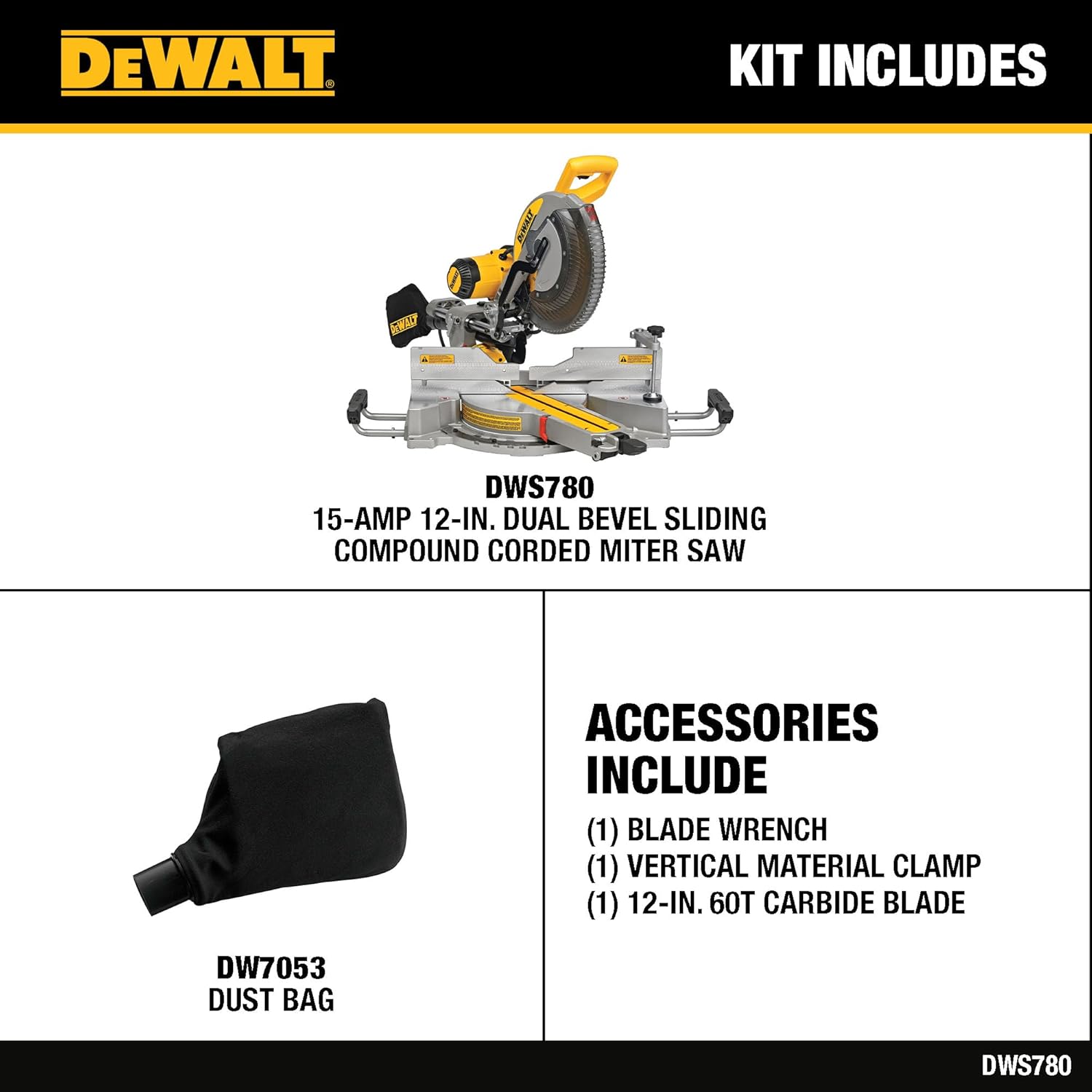
A miter saw — sometimes called a “chop saw” — is a stationary power saw mounted on a pivoting arm that swings left and right to make angled cuts across the width of a board. It’s the tool that makes trim carpentry, frame assembly, and furniture joinery fast and repeatable. If you’ve ever watched someone cut crown molding on a job site in thirty seconds flat, that’s what a miter saw does. What this guide will tell you is something most buying guides skip: the saw that’s right for your shop depends less on brand loyalty and more on the specific cuts your workflow actually demands — board width, cut angle, portability needs, and the footprint your space can absorb. By the end, you’ll have a clear decision framework, not just a list of specs.
The Three Variables That Actually Drive the Decision
Most buyers walk into this purchase anchored on blade diameter — 10-inch vs. 12-inch. That’s a fine starting point, but it’s the third variable, not the first. Here’s the right order to think through it.
1. Crosscut Capacity (Width, Not Just Angle)
Crosscut capacity is the maximum width of board the saw can cut in a single pass. This is where a lot of intermediate buyers get burned. A standard 10-inch single-bevel miter saw (one that tilts in one direction only) typically handles boards up to about 5½ inches wide at 90 degrees. That’s fine for dimensional lumber like 2x4s and 2x6s, and for most trim work. But if you’re cutting 1x8 or wider shelf stock, or making furniture panels, that capacity disappears fast.
A sliding compound miter saw adds a rail system that lets the blade travel forward through the cut — think of it like a radial arm saw’s motion. That movement extends crosscut capacity dramatically. A 10-inch slider (like the Bosch GCM10SD or the Makita LS1019L) can typically handle 12 to 14 inches of crosscut width. A 12-inch slider pushes that to 16 inches or beyond.
This Old House’s tool selection guide puts it plainly: if you’re working with material wider than 6 inches regularly, a sliding saw stops being a luxury and becomes a requirement.
2. Bevel Type: Single vs. Dual
A single-bevel saw tilts the blade in one direction — say, left — to make angled cuts for crown molding or compound joints. A dual-bevel (or double-bevel) saw tilts both ways. The practical difference: with a single-bevel saw, you flip your workpiece to cut the mirror angle. With dual-bevel, you flip the saw head instead, leaving your workpiece flat and clamped.
For occasional crown molding, single-bevel is workable. For anyone running production trim, cabinetry work, or picture frames where you’re alternating bevel directions on every cut, dual-bevel pays for itself in time and reduced error rate. Popular Mechanics’ 2025 miter saw buying guide notes that dual-bevel models have largely become the default recommendation in the mid-range and up, because the price delta has compressed to $50–$100 on most competing pairs.
3. Blade Diameter: 10-Inch vs. 12-Inch
Larger blades reach more capacity and can handle thicker stock, but they add weight, cost, and blade-replacement expense. Here’s the honest math:
By the numbers:
- 10-inch replacement blades (quality carbide): $35–$80
- 12-inch replacement blades (same tier): $65–$130
- Weight delta, comparable models: 12-inch saws typically run 8–15 lbs heavier
- Crosscut capacity gain (sliding, 90°): ~2–4 extra inches on a 12-inch vs. 10-inch slider
For most dedicated shop work, a 10-inch slider covers the overwhelming majority of tasks while keeping blade cost and footprint manageable. The 12-inch makes more sense when you’re regularly breaking down wide, thick material — say, 4/4 hardwood slabs or LVL beam stock — and the saw is stationary. Wood Magazine’s sliding vs. non-sliding comparison concludes that the 10-inch slider is the “sweet spot for shops where portability and versatility share equal weight.”
Matching Saw Type to Shop Workflow
This is where the decision framework gets specific. Don’t buy based on what the saw can do — buy based on what your workflow requires 80% of the time.
The Weekend DIYer and First-Time Shop Builder
If you’re building furniture projects, cutting dimensional lumber for decks or framing, and doing occasional baseboard and door-casing trim, a 10-inch non-sliding compound miter saw in the $200–$350 range — Ryobi, Ridgid, or Metabo HPT at this tier — handles the job without occupying the budget or the bench space a slider demands. Owners of these saws consistently report that the limitation isn’t blade size but the lack of a fence with a positive miter stop — so prioritize models with solid detents at 22.5°, 31.6°, and 45°.
The Garage Shop Woodworker (Intermediate)
You’re cutting hardwood for furniture, making cabinet face frames, working with wider stock. This is the buyer who genuinely needs a 10-inch dual-bevel sliding saw in the $500–$900 range. The Bosch GCM10SD and Makita LS1019L are the two models reviewers at ToolBoxBuzz and Popular Mechanics consistently return to in this segment. The Makita’s compact sliding mechanism is notable: it extends capacity without requiring the full rear clearance a conventional rail-style slider demands — a real win for shops where wall space is tight. Owners across long-run reviews cite that compact-slider design as one of the most underappreciated ergonomic advantages in the category.
Fine Woodworking’s “Miter Saw Smackdown” feature highlights that at this price tier, the differences between top-tier competitors are less about cut quality (all are good) and more about fence height, clamp accessibility, and detent plate precision — details that matter more over thousands of cuts than they do during a Saturday morning unboxing.
The Serious Craftsperson and Custom Shop
At this level, the conversation shifts toward the Festool Kapex KS 120 REB (~$1,100–$1,300) or the Mafell ERIKA 85 EC (a European-standard precision slider that commands premium pricing but has earned a following among furniture makers who demand sub-millimeter repeatability). These aren’t aspirational footnotes — they’re capital investments with a different cost-per-use logic. If your saw runs six to eight hours a day building custom cabinetry at $150+ per hour shop rate, blade quality and cut precision are revenue variables, not vanity metrics.
The Festool Kapex’s integrated dust extraction and compact footprint make it a genuine option for finish carpenters and shop-based craftspeople who run a Festool ecosystem already. The resale value holds well — a used Kapex in good condition typically commands 60–70% of retail years later, per aggregated resale listings, which is unusual for power tools.
For renovation contractors who need portability plus capacity, the DeWalt DWS779 (12-inch sliding, ~$400–$500 street price in mid-2026) remains a workhorse choice: rated for heavy use, widely serviced, and parts-available through every major dealer network.
The Footprint Problem Nobody Talks About Enough
Sliding saws need rear clearance. A conventional rail-style sliding saw needs 10–18 inches of free space behind the unit so the rails can extend during the cut. In a small garage shop, that often means the saw can’t be pushed against a wall — which eats floor space you may not have.
Two ways around this:
- Compact-slider design (Makita LS1019L, Kapex KS 120): the mechanism folds back on itself rather than extending rails rearward. You can push these against a wall. If your shop is under 400 square feet, this matters more than blade diameter.
- Miter saw stand with mobility: if portability is a real need (job site to shop and back), a collapsible stand like the Bosch T4B or Dewalt DWX726 converts any saw into a mobile station.
This Old House’s tool workshop planning section recommends dedicating a minimum 6-foot wide by 3-foot deep footprint to a miter saw station — more if you’re cross-cutting long stock that needs outfeed support. Factor that into your bench layout before you commit to a saw size.
The Cordless Question
Cordless miter saws have come a long way. The Milwaukee M18 FUEL 10-inch sliding miter saw and the Makita XSL08Z (18V X2, effectively 36V) are the options serious reviewers point to in the cordless category. Both put out runtime and cut performance that owners consistently describe as “indistinguishable from corded for trim and framing work.” The ToolBoxBuzz cordless vs. corded miter saw comparison found that cordless models begin losing meaningful ground only in sustained heavy-stock ripping sessions — which isn’t what a miter saw is for anyway.
The cordless premium is real — expect to add $150–$250 over corded equivalents at similar spec levels — but if you’re already in Milwaukee’s M18 or Makita’s LXT ecosystem, the battery share argument is compelling. A saw you can unplug and carry to the deck framing project and back to the shop is genuinely more useful than a marginally cheaper corded model.
The Decision Rule
Here’s the “if X, then Y” framing you came here for:
-
If your stock is mostly 6 inches wide or narrower and your budget is under $350: a 10-inch non-sliding compound miter saw handles 80% of DIY and framing work. Don’t overpay for capacity you won’t use.
-
If you’re building furniture, doing cabinetry, or cutting wider hardwood in a dedicated shop: a 10-inch dual-bevel sliding saw in the $500–$900 range is the right center of gravity. Favor the Makita LS1019L if wall clearance is tight; favor the Bosch GCM10SD if a longer fence and more solid detent feel matter more.
-
If you’re in a Festool or high-end ecosystem, running a finish shop, or need the saw to earn its keep at a professional day rate: the Kapex’s compact design, dust integration, and resale durability make the premium defensible on a cost-per-use basis over a five-year horizon.
-
If you’re fully committed to a cordless platform: the Milwaukee M18 FUEL or Makita X2 sliding saw delivers the runtime to justify the premium — provided you already own the batteries.
-
If your shop is under 300 square feet: solve for footprint first. A compact slider you can push against the wall beats a larger-capacity saw that forces you to rearrange the shop every time you use it.
The best miter saw isn’t the most capable one on the spec sheet. It’s the one that fits your material, your space, and the workflow you’re actually running — every single time you switch it on.