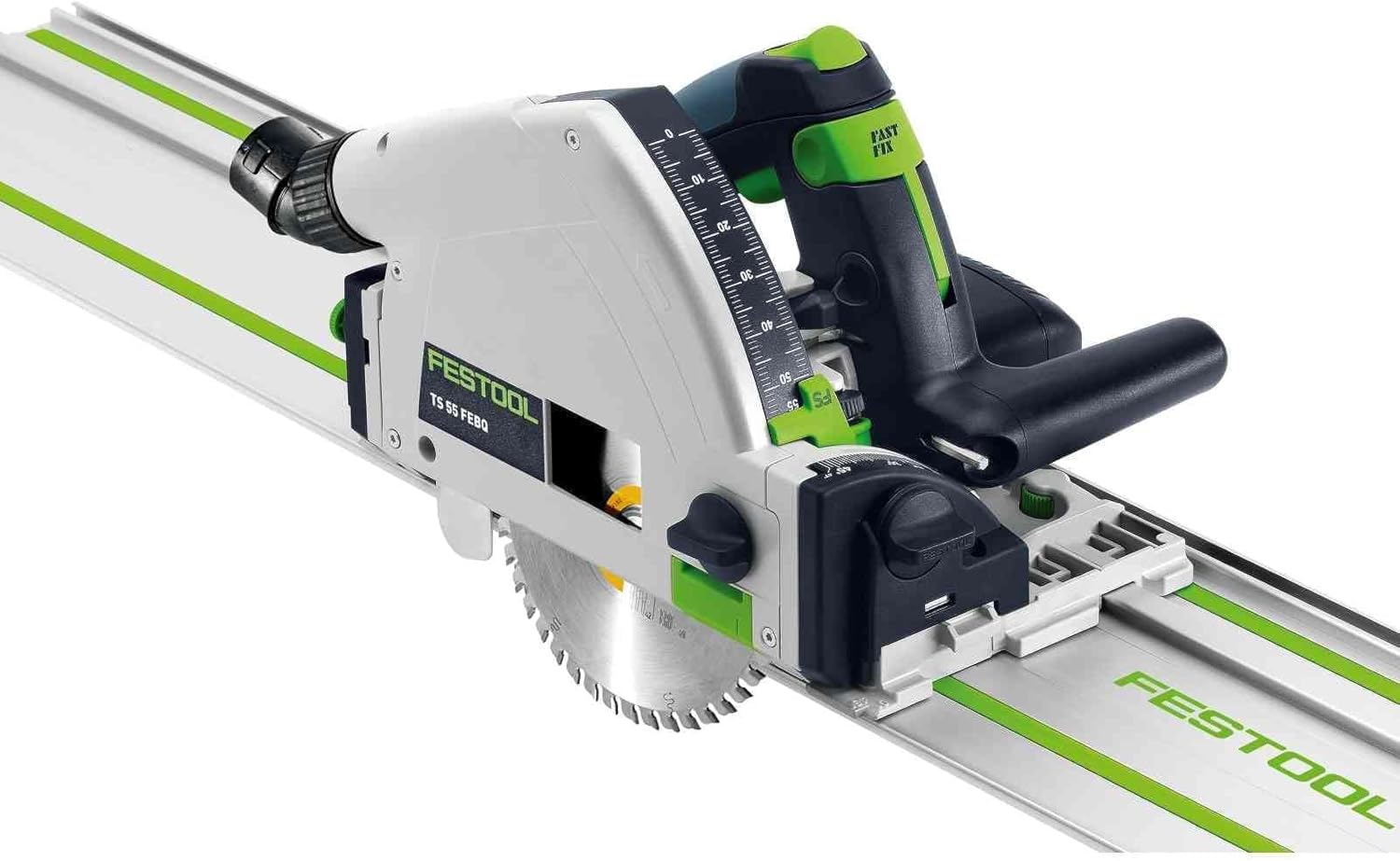
A track saw is a circular saw — a handheld blade that spins and cuts — that rides along a dedicated aluminum guide rail instead of moving freehand across the material. That rail clamps to your workpiece or holds itself in place via a rubber gripping strip on its underside, and the result is a dead-straight cut that a standard circular saw, no matter how steady your hand, simply cannot deliver consistently. For anyone breaking down full sheets of plywood or MDF, cutting hardwood panels for cabinet doors, or ripping solid lumber without a full-size table saw, a track saw is the practical answer in a space-constrained shop. The question isn’t really whether a track saw is worth it — for most woodworkers beyond the beginner stage, it is. The question is which system to buy into. Because the saw is only part of the purchase: you’re committing to rails, connectors, stops, and in some cases an entire dust-collection ecosystem. This article walks through that decision with real numbers and clear tradeoffs, so you can match the system to your actual workflow instead of defaulting to the name with the most marketing visibility.
What You’re Actually Buying (And Why the System Matters More Than the Saw)
Once you move past a basic circular saw, you’re not just buying a cutting tool — you’re buying a precision platform. Every track saw system consists of at minimum: the saw unit, one or more guide rails, and a connector to join rails end-to-end for long cuts. At the higher end, the ecosystem expands to include dust ports, integrated dust extractors, rail stops, parallel guides, and compatible storage.
This distinction matters because rail compatibility is not universal. Festool rails, Makita rails, and the generic rails that come with budget saws are not interchangeable without adapters — and even with adapters, fit tolerances vary. If you buy a budget saw and later want to upgrade to a better saw, your rails may not transfer. Conversely, if your shop already has a Festool rail investment, that changes the math on buying a second saw significantly.
The three tiers in play:
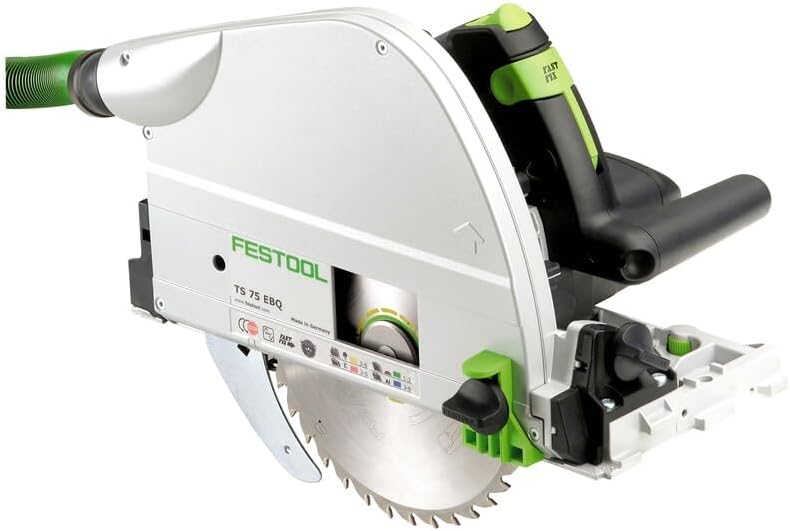
- Festool TS 55 REQ-F / TS 60 K-F: The benchmark system. Rail quality, splinter guard integration, and dust extraction are best-in-class by most published assessments. Price entry point for saw plus a 55-inch rail is roughly $680–$780 depending on bundle.
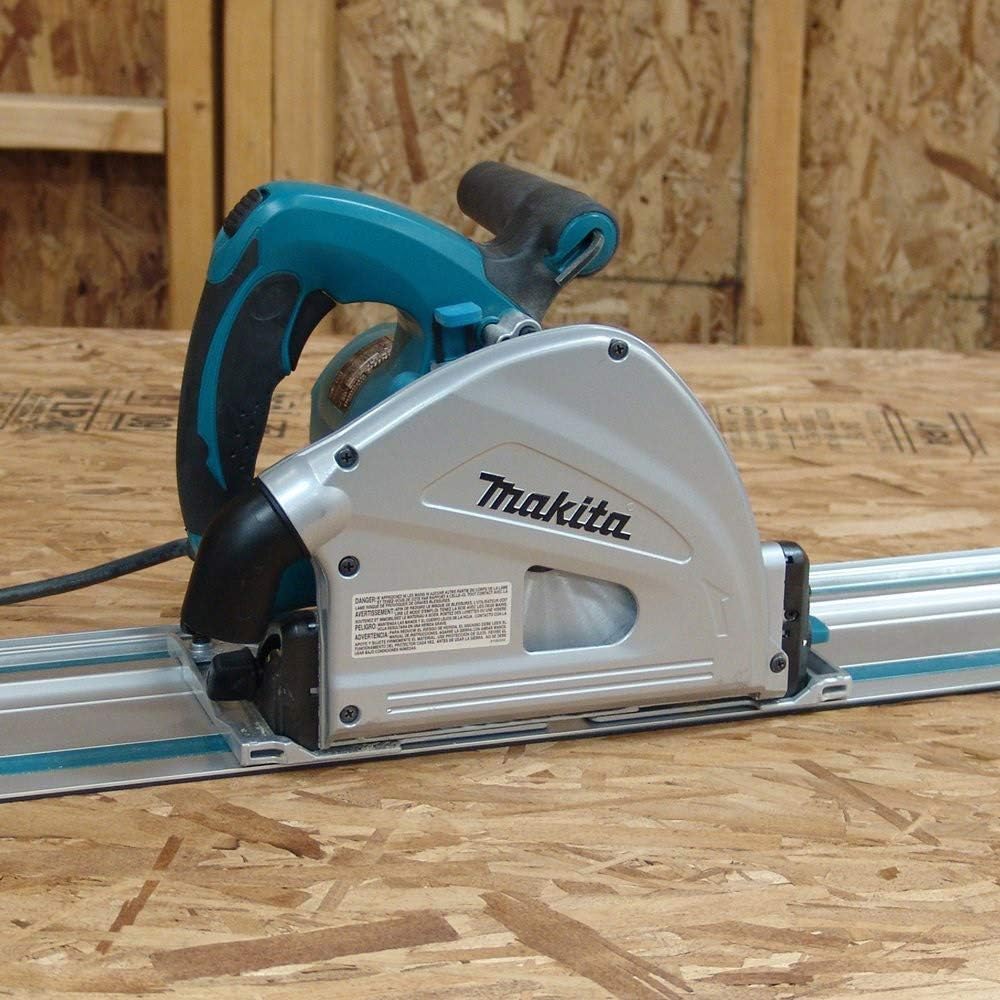
- Makita SP6000J / SP001GZ: The legitimate alternative at a real price break. The SP6000J with one rail runs approximately $380–$430; the newer 40V brushless SP001GZ sits around $480–$520 with a rail.
- Budget tier (WEN, Einhell, and similar): Entry points from $100–$250 for saw plus rail, with significant tradeoffs in rail stiffness, splinter guard durability, and dust port fit.
Festool: The Case for Paying the Premium
Rail Quality, Dust Integration, and Ecosystem Coherence
Festool
$1,224.00
In stock on Amazon
Check price on AmazonFestool’s pricing is genuinely difficult to defend if you look at the saw in isolation. A TS 55 REQ-F is roughly twice the cost of the Makita SP6000J for similar cut capacity. The defense of that price isn’t in the motor specs — it’s in the ecosystem coherence.
Rail quality and length options. Festool rails are available in multiple lengths, from short 420mm sections up to 5,000mm runs, and the connector system maintains alignment within a published tolerance that operators in long-run reviews describe as highly repeatable. Wood Magazine’s “Track Saw Guide Rail Systems Compared” (2023) noted that Festool rails retained their anti-slip grip strip integrity longer under repeated use than most alternatives tested in that evaluation.
Dust extraction integration. The TS 55 and TS 60 are designed around Festool’s CT dust extractor ecosystem. The port geometry, hose diameters, and Bluetooth-synced auto-start on CT extractors are native, not adapted. If dust control is a real constraint in your shop — finished basement, apartment building, fine finishing work — this isn’t a luxury feature. Fine Woodworking’s “Track Saw Roundup” (2024) consistently rated Festool’s dust capture at the cut line as the best available among production track saws evaluated in that review.
Splinter guard replacement and long-term cost. The rubber splinter guard strip on the rail edge is what delivers the zero-tearout cut Festool markets. These wear out. Festool sells replacement strips, and their consumables supply chain in the North American market remains robust — a real consideration after several mid-tier brands have exited the consumables market entirely.
Resale value. Used Festool TS 55 units in good condition hold their value unusually well in the secondhand market relative to most power tools — a factor worth considering when amortizing the entry cost over years of use. Pro Tool Reviews, in their long-term Festool TS 55 REQ analysis, framed the cost-per-cut math as favoring the premium unit beyond roughly 500 hours of accumulated use.
Buy Festool if: You’re doing production cabinetry, fine furniture, or any client-facing work where tearout and dust are non-negotiable; you’re already in the Festool ecosystem; or you treat tools as capital assets where resale matters.
Festool
$1,224.00
In stock on Amazon
Check price on AmazonMakita: The Honest Best-Value Pick for Most Shops
Mid-Tier Performance at a Meaningful Price Break
Makita
$589.00
In stock on Amazon
Check price on AmazonThe Makita SP6000J is the answer to “what do most serious hobbyists and intermediate pros actually run?” — and the numbers support that position. Tool Box Buzz’s “Makita SP6000J Track Saw Review” (2024) put the SP6000J’s cut accuracy within measurable distance of the Festool on parallel tests, with rail stiffness described as competitive for lengths up to 55 inches.
Rail compatibility breadth. Makita rails use a different groove geometry than Festool but have become a de facto secondary standard. A range of third-party accessories — parallel guides, stops, clamps — fit Makita rails, which means you’re not locked into a proprietary supply chain for every add-on.
Saw performance per dollar. The SP6000J’s 12-amp motor and 6-1/4-inch blade handle the cuts most shops actually make: sheet goods, dimensional lumber, and panels up to about 2-1/4 inches thick at 90 degrees. The newer 40V brushless SP001GZ extends battery convenience if you’re already on Makita’s 40V XGT platform, removing the cord from the workflow entirely.
Dust extraction — good, not great. The Makita’s dust port connects to most standard shop vac hose diameters with minimal adapting. This Old House’s “Best Track Saws” guide (2025) characterized Makita’s dust capture as adequate for general shop use but not ideal for finished-space environments where airborne particulate is a meaningful concern.
The honest tradeoff. Makita’s rail connector system for joining two rails has received mixed operator feedback in long-run reviews. Fine Woodworking’s “Track Saw Roundup” (2024) noted that the alignment precision of the joined-rail configuration is slightly less repeatable than Festool’s — not a problem for most cuts, but worth knowing if you’re regularly making cuts longer than eight feet in material that penalizes drift. Tool Box Buzz’s testing positioned the SP6000J as delivering approximately 85% of Festool’s practical performance at roughly 55% of the price, with an accessories market that provides genuine long-term support.
Buy Makita if: You’re outfitting a dedicated hobby or small-professional shop, you’re not yet invested in Festool’s system, and you want a legitimate workhorse for roughly half the Festool price with an accessories market you can count on.
Makita
$589.00
In stock on Amazon
Check price on AmazonBudget Alternatives: Where They Work, Where They Break
Entry-Level Systems and Their Honest Failure Modes
Kreg
$349.00
In stock on Amazon
Check price on AmazonBudget track saws — WEN, Einhell, and similar — have earned a legitimate place in the market for specific use cases. Popular Mechanics’ “Best Track Saws of 2025” buying guide acknowledged that budget saws can deliver surprisingly clean cuts across the first several hundred linear feet of use, particularly in MDF and softwood plywood where tearout is more forgiving than in hardwood veneers.
The failure modes, per aggregated owner reports reviewed across published tool evaluations, are consistent: rail stiffness degrades over time, the anti-splinter strip separates or compresses unevenly with heavy use, and dust port connections are loose enough that capture rates drop significantly compared to purpose-built systems. For occasional use — a deck renovation, a kitchen remodel, a one-off furniture project — a sub-$200 track saw may be the right call. It is not a tool to build a long-term system around.
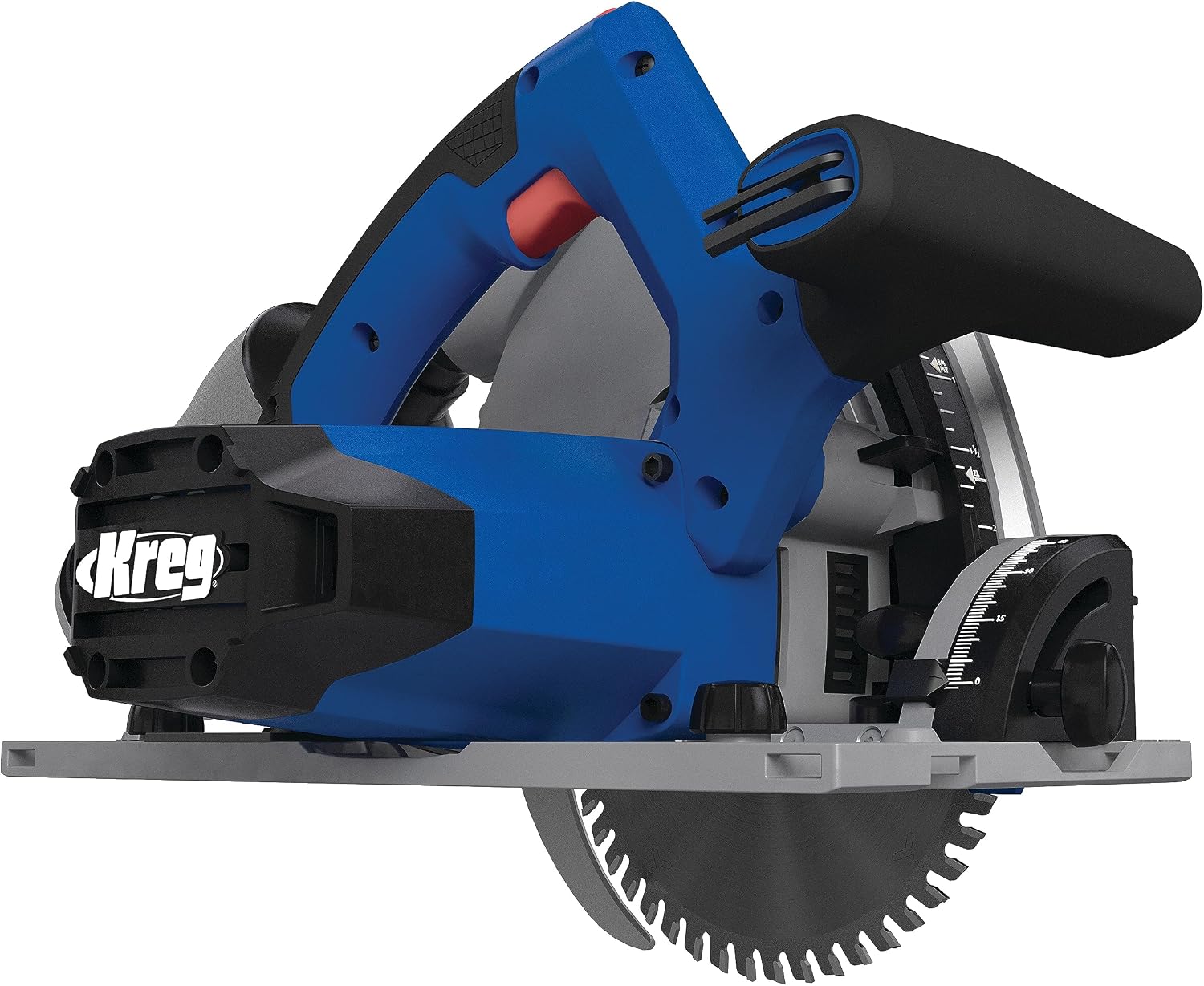
One overlooked entry point worth naming separately is the Kreg Adaptive Cutting System, which operates differently from standard track saws — the guide attaches to the saw via a dedicated mechanism — but gives intermediate users a rail-based cutting solution in the $250–$300 range that addresses the rail stiffness problem more credibly than most sub-$200 all-in-one kits. Pro Tool Reviews noted the Kreg system’s compatibility with standard circular saws as a meaningful differentiating factor for shops that already own a quality circular saw and want to add track capability without purchasing a dedicated saw unit.
Buy budget if: You have one project where a track saw would be valuable and you’re not building a shop system. The resale math on budget track saws doesn’t favor holding, and the used market prices reflect exactly that.
Kreg
$349.00
In stock on Amazon
Check price on AmazonSide-by-Side: How the Three Tiers Compare
Festool in Context
Festool
$1,224.00
In stock on Amazon
Check price on AmazonAt roughly $720 for saw plus 55-inch rail, Festool asks the most and delivers the most. Native dust extraction, replaceable splinter guards with a robust supply chain, and rail connectors that published reviewers — including Wood Magazine’s “Track Saw Guide Rail Systems Compared” (2023) and Fine Woodworking’s “Track Saw Roundup” (2024) — describe as the most repeatable in the category. The ecosystem investment pays off over years of production use; it’s a poor fit for occasional or single-project work.
Festool
$1,224.00
In stock on Amazon
Check price on AmazonMakita in Context
Makita
$589.00
In stock on Amazon
Check price on AmazonAt roughly $400 for saw plus 55-inch rail, Makita delivers competitive cut accuracy, broad third-party accessory support, and a growing cordless option in the 40V SP001GZ. This Old House’s “Best Track Saws” (2025) and Tool Box Buzz’s dedicated SP6000J review (2024) both confirm it as the go-to recommendation for serious hobbyists and small-shop professionals who aren’t already invested in another ecosystem. The joined-rail alignment limitation is real but affects a minority of cutting scenarios.
Makita
$589.00
In stock on Amazon
Check price on AmazonBudget and Entry-Level in Context
Kreg
$349.00
In stock on Amazon
Check price on AmazonAt $130–$250, budget systems serve a narrow but legitimate use case: occasional work, single projects, or situations where the tool budget is genuinely constrained. Popular Mechanics’ “Best Track Saws of 2025” affirmed that early-use cut quality is competitive, but the long-term degradation of rail stiffness and splinter guard fit means these are not systems to build a shop workflow around. Rent if the rental yard carries them; buy budget only if you intend to sell when the project is complete.
| System | Saw + Rail Entry Price | Splinter Guard | Dust Port Fit | Best For |
|---|---|---|---|---|
| Festool TS 55 + 55” rail | ~$720 | Native, replaceable | Native CT/CTL integration | Production and finishing work |
| Makita SP6000J + 55” rail | ~$400 | Included, third-party available | Standard shop vac adapter | Serious hobbyist / small pro shop |
| Budget tier (WEN, Einhell) | ~$130–$250 | Included, quality varies | Generic, often loose fit | One-project or occasional use |
Kreg
$349.00
In stock on Amazon
Check price on AmazonThe Decision Framework: Matching System to Shop Reality
Here’s where to land based on your actual situation, not the marketing:
If you’re doing production cabinetry or client work and dust control matters: Festool TS 55 or TS 60. The ecosystem coherence and strong resale value justify the entry cost when amortized across years of production use.
If you’re a serious hobbyist or small-shop pro not yet committed to an ecosystem: Makita SP6000J or the 40V SP001GZ if you’re already on XGT batteries.
If you need a track saw for one project or season: Buy budget, use it, sell it. Or rent. Most tool-rental yards carry track saws; at $40–$60 per day, a three-day rental costs less than the cheapest system you can buy and eliminates rail storage overhead entirely.
If you’re already on Festool rails: The incremental cost of adding a second Festool saw or upgrading within the lineup is lower than it appears, because your rail investment transfers directly. Don’t let sticker shock on the saw unit push you toward a Makita saw that orphans your existing rail inventory.
One final consideration the spec sheets don’t capture: how often will you break down full sheets alone? A 4×8 panel on sawhorses with a 55-inch rail and no rail stop requires a different handling workflow than a shop with an outfeed table and a second set of hands. Festool’s rail stop and clamping accessories are genuinely well-designed for solo work — and that ergonomic reality has practical value when you’re the only person in the shop at 9 p.m. trying to finish a carcass.
The right track saw system is the one that fits your workflow, not the one with the most prestigious badge. For most intermediate shops, that answer is Makita with a quality rail extension. For production-oriented or ecosystem-committed shops, Festool earns its price over time. Either way, budget alternatives are a short-term solution at best — and the secondhand market prices them accordingly.